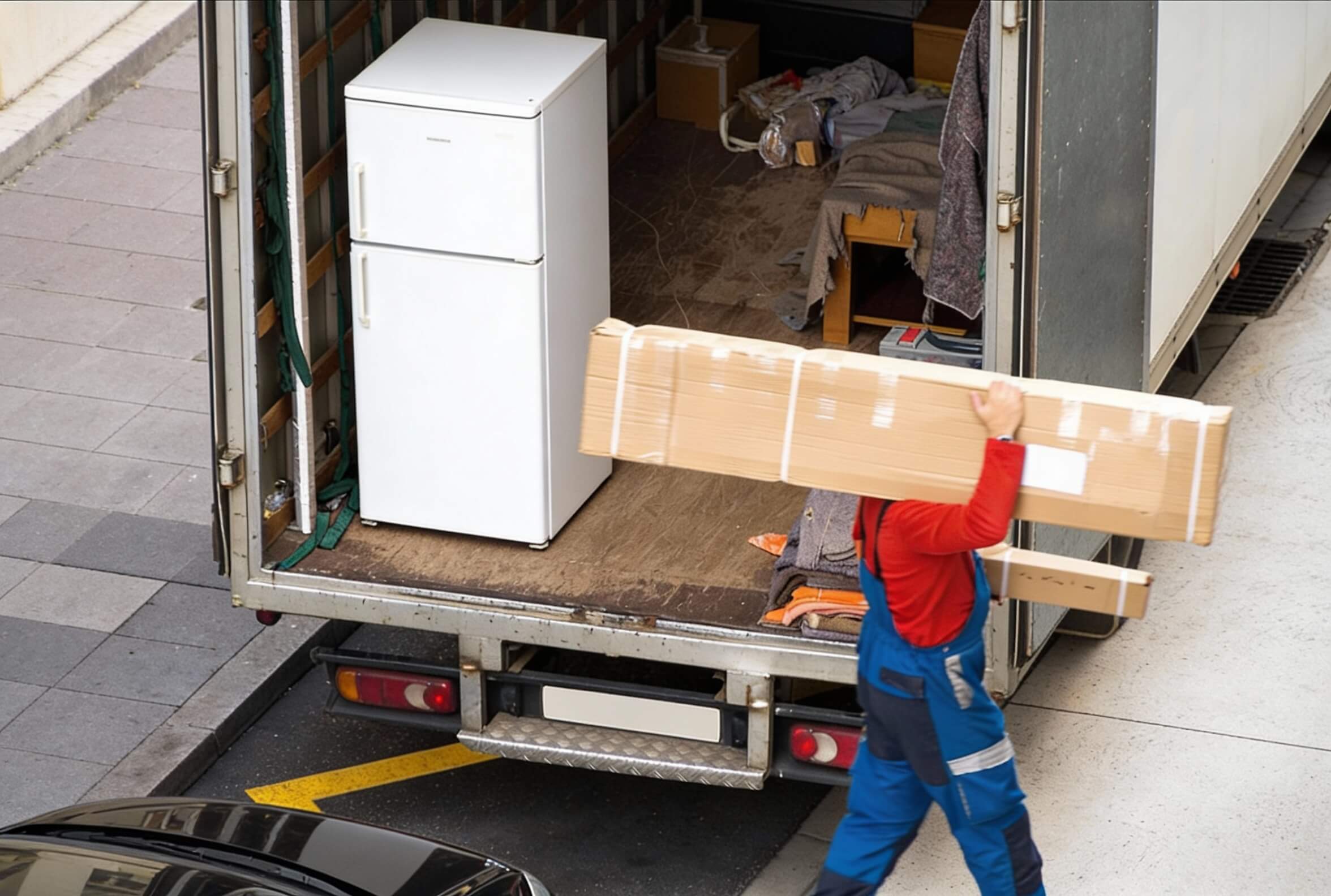
How to Move a Fridge
Moving a fridge is one of the riskiest tasks in any house move because of its weight, height, and sensitive internal parts. One wrong move can destroy the compressor, damage floors, or put someone out of action with a back injury. This guide is for Melbourne homeowners and renters who want the job done safely and efficiently. You will learn how to prepare the fridge, move it correctly, transport it without damage, and know when to call experienced removalists in Melbourne.
Why moving a fridge needs care
A standard fridge weighs between 90 and 150 kilograms, with most of that weight sitting high. This makes it unstable on stairs, ramps, and uneven surfaces. The cooling system also contains oil and refrigerant lines that fail if the fridge is tilted incorrectly.
Most damage happens because the fridge is rushed, laid flat, or moved without the right equipment. Once the compressor is damaged, repairs cost more than the appliance is worth.

Prepare the fridge before moving
Preparation must start 24 hours before the move.
This protects the fridge and makes the move faster:
- Empty all food and shelves
- Switch off and unplug the fridge
- Defrost fully so water does not leak
- Clean and dry the interior
- Remove or secure loose drawers and trays
On move day:
- Tape doors shut using low residue tape
- Wrap the fridge in thick moving blankets
- Secure the wrap with stretch film
Proper prep stops water damage, keeps doors closed, and prevents dents and scratches.
The correct way to move a fridge
A fridge must stay upright at all times. Tilting more than 45 degrees allows compressor oil to flow into cooling lines, which causes long term failure.
Follow this process:
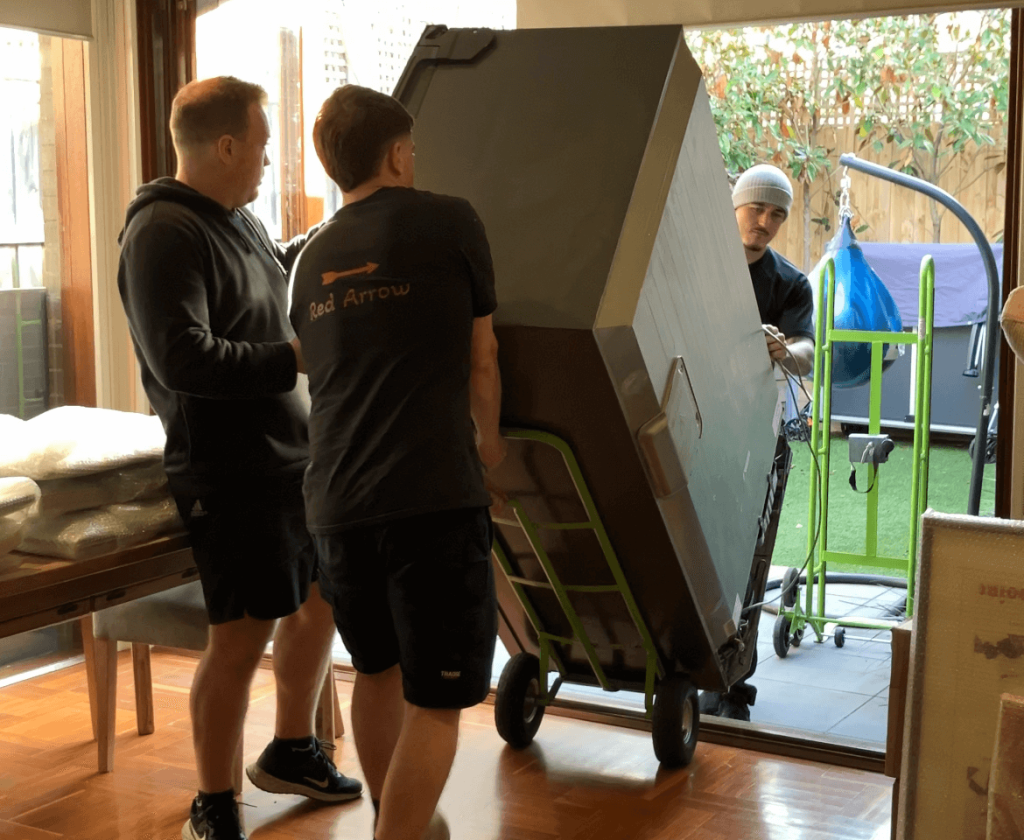
- Use a heavy duty appliance trolley with straps
- Tilt the fridge slightly to slide the trolley underneath
- Strap it firmly across the middle and upper section
- Move slowly with one person guiding and one controlling the load
- Take stairs one step at a time with the fridge facing uphill
If access is tight, stop and reset. Forcing the move is how things go pear shaped.
Transporting a fridge safely
Inside the truck, position the fridge upright against a solid wall. Strap it at two separate points so it cannot move under braking or cornering. Never lay it down, even for short trips.
Once delivered, wait 3 to 4 hours before plugging it back in. This allows compressor oil to settle correctly and prevents internal damage.
When to use professional fridge movers
Professional fridge movers use appliance dollies, stair climbers, floor protection, and load restraints designed for heavy whitegoods. They also understand how to move large appliances through Melbourne terraces, apartments, and tight driveways without damage.
Hiring fridge movers Melbourne locals trust is the right call when:
- There are internal or external stairs
- The fridge is double door or commercial size
- Access involves lifts or narrow hallways
- The fridge move is part of a full house relocation
It saves time, avoids injury, and keeps the appliance in good nick.
Cost considerations for fridge moves
Fridge moves are usually charged as part of a minimum call out or hourly rate. Pricing is determined by access, stairs, distance, and whether specialised equipment is required. For a clear breakdown of rates, inclusions, and what affects pricing, the Removalist Cost Melbourne guide explains what to expect before you book.
Common mistakes to avoid
- Laying the fridge flat in a van or ute
- Moving it without straps or a trolley
- Attempting stairs with one person
- Rushing corners and doorways
- Plugging it in immediately after delivery
Avoid these mistakes and the move stays controlled from start to finish.
Next steps
If you are moving house or relocating multiple appliances, it makes sense to plan fridge transport as part of the overall move. Professional removalists coordinate access, timing, and load placement so everything arrives safely in one trip and the job is sorted properly.
Common Questions about Moving a Fridge
Can you lay a fridge down to move it?
No, a fridge must never be laid flat.
Laying a fridge down causes compressor oil to flow into cooling lines, which leads to permanent damage once the fridge is turned back on.
How long should a fridge sit before plugging it in?
A fridge must sit upright for 3 to 4 hours before being plugged in. This allows compressor oil to settle back into place and prevents internal cooling system failure.
Is it safe to move a fridge without a trolley?
No, moving a fridge without a trolley is unsafe.
Fridges are top heavy and difficult to control. An appliance trolley with straps is required to prevent tipping, injury, and floor damage.
How many people should help move a fridge safely?
A minimum of two adults is required to move a fridge safely.
One person controls the load while the other guides movement, especially on stairs or tight access points.
Do removalists move fridges as part of a house move?
Yes, professional removalists move fridges as standard.
They use appliance dollies, protective wraps, and truck restraints to transport fridges upright and safely as part of the move.
TLDR
- Always move a fridge upright
- Defrost and prepare it 24 hours before moving
- Use an appliance trolley with proper straps
- Never rush stairs or tight access points
- Wait 3 to 4 hours before plugging it back in
- Book professionals for large fridges or full moves