Moving House with Pets
Moving house with pets adds a layer of complexity that many Melbourne households underestimate. Dogs and cats react strongly to noise, strangers, and disrupted routines, which is why planning the move alongside experienced removalists in Melbourne residents rely on keeps the day controlled and safe. This guide explains how to prepare pets before moving day, manage them during the move, and help them settle quickly into the new home without stress or delays.
Why pets struggle during house moves
Pets rely on familiarity to feel secure. Moving day removes familiar smells, spaces, and routines all at once. Open doors, loud lifting, and constant movement trigger anxiety and escape behaviour.
Cats often hide or run. Dogs may bark, pace, or become reactive. Without clear boundaries, pets can escape or get injured while movers are carrying heavy furniture.
Prepare pets before moving day
Preparation should begin several days before the move.
Essential steps:
- Keep feeding and walking times unchanged
- Leave carriers and crates out so pets adjust early
- Update microchip details and ID tags
- Pack pet items last to retain familiar scents
- Arrange boarding or a sitter if needed
Early preparation removes pressure on moving day and keeps pets calm.
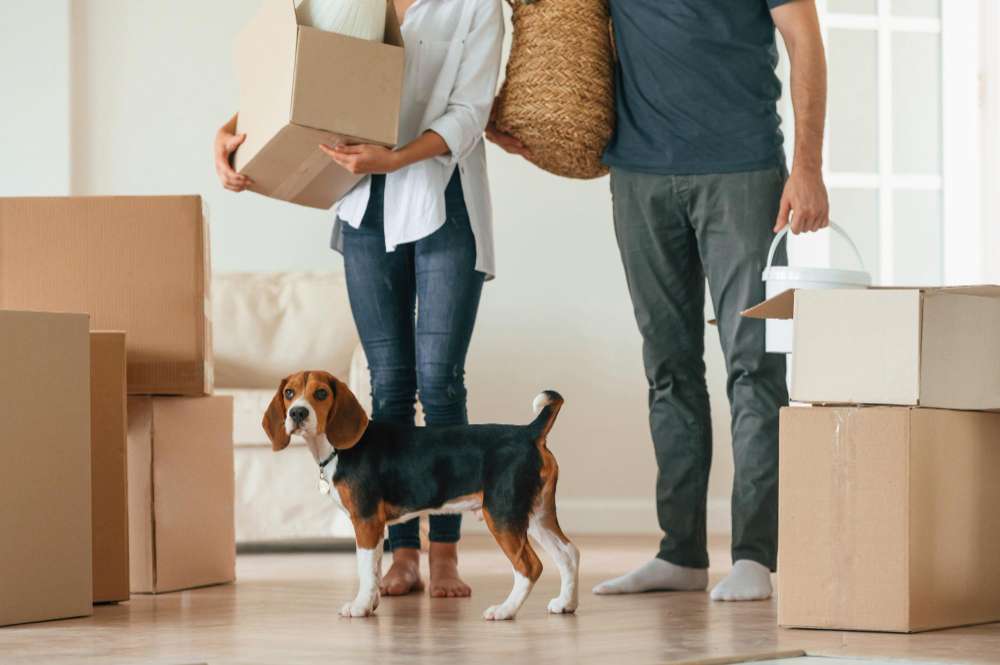
Moving house with a cat
Cats must be confined early and kept isolated.
They cope best in quiet, enclosed spaces away from activity.
Best practice:
- Secure cats in a carrier or closed room before movers arrive
- Provide bedding, water, and a litter tray if staying onsite
- Transport cats last to minimise time in transit
- Set up one closed room first at the new house
Allow cats to explore slowly. Forced exposure increases stress and hiding behaviour.
Moving house with a dog
Dogs need supervision and controlled activity.
Recommended approach:
- Book a dependable carer or dog daycare to look after your pet during the move
- Keep dogs leashed if they remain at the property
- Exercise dogs early to reduce restlessness
- Transport dogs only after the truck is fully loaded
At the new home, walk dogs around the property before bringing them inside to build familiarity.
Moving day safety rules
Pet safety depends on strict controls.
Non negotiable rules:
- Keep pets away from open doors and driveways
- Never allow movers to handle animals
- Transport pets separately from furniture
- Keep cleaning products and tools out of reach
These steps prevent injuries and keep the move running smoothly.
Settling pets into the new home
Routine must resume immediately.
Pets settle faster when feeding, walking, and sleeping times stay consistent.
Helpful steps:
- Set up food, water, and bedding first
- Use familiar toys and blankets
- Restrict access to one area initially
- Expect temporary behaviour changes for 3 to 7 days
Consistency reduces anxiety and speeds up adjustment.
Timing your move with pets in mind
Moves involving pets often take longer due to added logistics and supervision. Packing early, scheduling midweek, and keeping pets off site reduces delays and hourly costs. In the second sentence of this final body paragraph, preparation also means having the right cartons ready, because scrambling for supplies adds stress, and the Moving Boxes Melbourne guide explains how to source suitable boxes before moving week.
Common Questions about Moving House with Pets
Should pets stay home on moving day?
No, pets are safest off site on moving day.
Boarding, daycare, or a trusted carer removes exposure to noise, open doors, and heavy lifting, which reduces escape and injury risk.
How do I stop my cat from running away during a move?
Cats must be confined before movers arrive.
Use a carrier or closed room with clear signage and never open that space until all doors are shut and activity stops.
Is it better to move pets first or last?
Pets should always be moved last.
This minimises time in transit and reduces exposure to noise and unfamiliar handling during loading.
How long does it take pets to settle after moving house?
Most pets settle within 3 to 7 days.
Maintaining routines, limiting access initially, and using familiar items speeds up adjustment and reduces anxiety behaviours.
Can removalists handle pets during the move?
No, removalists should never handle pets.
Animals can react unpredictably under stress, creating safety risks for both the pet and the crew.
TLDR
- Pets experience high stress during house moves
- Prepare routines, carriers, and ID details early
- Cats should be confined and moved last
- Dogs need supervision or off site care
- Restore routines immediately after arrival
- Plan timing and supplies to avoid delays